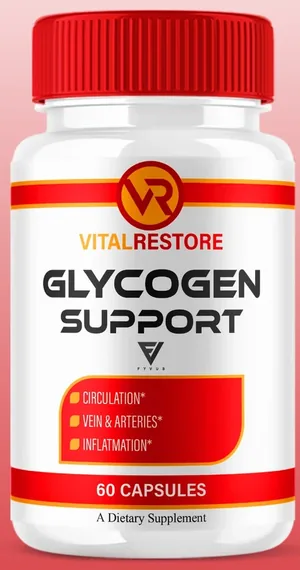
The Vital Restore ingredients list names 11 actives: three nutrients with printed amounts and eight botanicals inside one 400 mg proprietary blend.1 This post walks through each in a line or two, along with the other ingredients.
For each active we say what a reputable source reports and what caution it gives. Those sources describe the ingredient alone. They say nothing about what Vital Restore will do for you, and this site has not tested the product. The amounts of the eight botanicals are not printed, so they are unknown.
No. 01Which three nutrients does the label give amounts for?
The panel lists vitamin C at 50 mg, zinc at 7.5 mg and chromium at 2 mcg per capsule.1
Vitamin C is a nutrient most US adults get from food, with an adult RDA of 90 mg for men and 75 mg for women, and an upper limit of 2,000 mg a day.2 Zinc has an RDA of 11 mg for men and 8 mg for women, and an upper limit of 40 mg a day from all sources.3
Chromium is a mineral that may help the body use carbohydrates, fats and proteins. The NIH notes that supplements have shown mixed results for blood sugar in type 2 diabetes, and that they might cause low blood sugar when combined with diabetes medicines.4 See our chromium page for more.
The printed percentages are worth a glance. Vitamin C at 50 mg prints 84%, yet the adult Daily Value is 90 mg, so 50 mg is about 56% by our arithmetic. Zinc at 7.5 mg prints 68%, which fits an 11 mg Daily Value. These are reasons to read the panel closely, not proof that anything is wrong.2
No. 02What do reputable sources say about the eight botanicals?
Each botanical has a short, cautious entry from a health source, and most describe limited evidence plus things to check with a pharmacist.
| Botanical | What a source says | Caution to note |
|---|---|---|
| Turmeric | Not enough evidence for any health purpose5 | Liver injury reported with concentrated curcumin products |
| Cinnamon and cassia | Research does not clearly support use for any condition6 | Cassia contains coumarin, linked to liver problems |
| Prickly pear | Fruit mostly showed no significant effect on glucose; stem showed promise needing more study7 | Label lists the stem; amount unknown |
| Goji | Little evidence for many uses8 | Major interaction with warfarin9 |
| Bitter melon | Data limited and rated low quality10 | Cannot replace diabetes medicines; stomach upset is common |
| Holy basil | Few high-quality human studies11 | Might slow blood clotting and affect thyroid medicine |
| Olive leaf | Small studies with mixed results12 | May add to blood-pressure medicine |
The table lists seven rows because cinnamon appears twice on the label, as powder and as extract.
Notice the pattern in the table. Every source calls the evidence limited, mixed or unclear, and nearly every one mentions a medicine to check. That does not make an ingredient bad. It means a label with eight botanicals and no amounts gives you very little to weigh.
Turmeric is a good example. NCCIH says it is likely safe for 2 to 3 months at recommended amounts, but the recommended amount for this blend is unknown.5 Holy basil, a traditional herb, has few high-quality human studies behind it.13
No. 03Why does the cinnamon family appear twice?
The label lists cassia bark powder and a second cassia bark extract, so two of the eight botanicals come from the same plant family.1
NCCIH says it is unclear whether cinnamon helps blood sugar, and that larger or long-term use may cause stomach problems and allergic reactions.6 It also notes that cassia contains coumarin, which is linked to liver problems and is a concern for sensitive people, such as those with liver disease.6
Because both entries sit inside the blend and no amounts are printed, you cannot tell how much cassia a capsule holds in total. Our ingredients page and the Supplement Facts page show the same lines in more detail.
No. 04What are the other ingredients?
The other ingredients are a gelatin capsule, rice powder, vegetable-grade magnesium stearate, microcrystalline cellulose and silicon dioxide, in label order.1
- Gelatin capsule: the capsule is not plant-based.
- Rice powder, microcrystalline cellulose and silicon dioxide: common fillers and flow agents.
- Magnesium stearate: a common flow agent in capsules.
No allergen statement is printed on the label. If you have an allergy, ask your pharmacist and the seller before you order. Our other ingredients page covers each one.
Fillers and flow agents are ordinary in capsules and are not the main concern for most readers. The botanicals and the medicine questions deserve more of your attention than the capsule shell, though anyone with a gelatin or rice sensitivity should still ask.
No. 05What should you do with this list?
Take the list, not a conclusion, to your doctor or pharmacist, especially if you use diabetes medicines, blood thinners, blood-pressure medicine or thyroid medicine, or have liver or kidney disease.
Several entries above mention exactly those groups. Since the botanical amounts are unknown, the cautions cannot be set aside. This site never suggests the product for diabetes and never suggests changing or stopping a medicine.
The label also says not to use the product if you are pregnant or nursing, and to consult a health care provider before use.1 Several of the botanical sources advise against use in pregnancy as well.
Keep the bottle or a photo of the panel with you. A pharmacist can read it in a minute and tell you what matters for your own medicines.
Safety: Vital Restore is for adults. The label says do not use it if you are pregnant or nursing, and to talk with your healthcare provider before use. If you take diabetes medicine, a blood thinner, blood-pressure or thyroid medicine, or have liver or kidney disease, ask your doctor or pharmacist first. Never use a supplement in place of medicine you have been prescribed. Stop and seek medical help if you have a reaction.
Frequently asked questions
How many active ingredients does Vital Restore list?
Eleven named actives: vitamin C, zinc, chromium and eight botanicals inside the 400 mg proprietary blend.
Are the botanical amounts printed?
No. Only the 400 mg total for the blend is printed, so the amount of each botanical is unknown.
Is the capsule suitable for vegetarians?
The label lists a gelatin capsule, so the capsule is not plant-based. Ask the seller about anything else.
Does a source on an ingredient tell me what the product does?
No. A source on one ingredient describes that ingredient alone, not this product, whose amounts are not printed.
Is there an allergen statement on the bottle?
None is printed. If you have an allergy, check with a pharmacist and ask the seller before ordering.