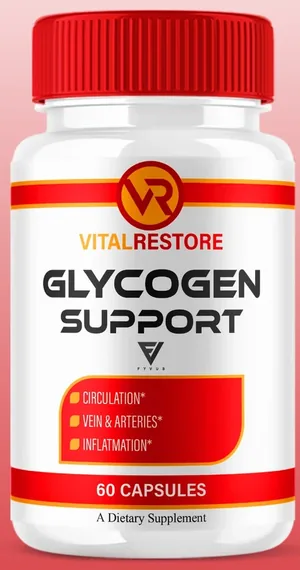
Turmeric in Vital Restore appears as turmeric root powder, the first item named inside the 400 mg proprietary blend, and the label does not say how much of it each capsule holds1. It is plain root powder on the label, not a named curcumin extract.
Turmeric is one of the most familiar names on the Vital Restore Glycogen Support bottle, and that familiarity can make it feel like a known quantity. It is not. This page explains what the label tells you and what it leaves out, what the National Center for Complementary and Integrative Health (NCCIH) says about the evidence, and the liver warning signs NCCIH asks people to know. It does not tell you what Vital Restore will do for you, because no source we rely on has studied this product.
No. 01How is turmeric listed on the Vital Restore label?
The label lists "Turmeric root powder" as the first of eight botanicals inside a 400 mg proprietary blend, with no separate amount1.
Here is what that line does and does not tell you:
- Part of the plant: root.
- Form: powder. The word "extract" is not used for turmeric, unlike several other blend items.
- Amount: not stated. The 400 mg figure covers all eight botanicals together.
- Curcumin content: not stated. The label gives no standardization, no curcumin percentage and no added absorption ingredient.
Because seven other botanicals share the same 400 mg, the turmeric in one capsule must be less than 400 mg. Beyond that, any number you see would be a guess. At the directions' 2 capsules a day, the whole blend comes to 800 mg a day, which is our arithmetic from the label, but the turmeric share of that is still unknown.
The proprietary blend page explains what a blend line can and cannot tell you, and the ingredients overview shows where turmeric sits among all eleven named actives.
No. 02What does the evidence on turmeric say?
NCCIH says there is not enough evidence to show that turmeric or curcumin is beneficial for any health purpose2.
That is a broad statement, and it is worth reading slowly. It does not say turmeric has never been studied. It has been studied a great deal. It says the studies so far do not add up to reliable evidence of benefit for any specific health use.
Many products put turmeric on the front of the pack, and many web pages list long strings of possible benefits. Set those against the federal research center's summary. When the evidence for the ingredient in general is not there, a capsule with an unknown amount of root powder cannot be assumed to do more.
To be specific about what this page does and does not claim:
- This site does not say the turmeric in Vital Restore supports blood sugar, glycogen, energy or anything else.
- The label itself does not explain why turmeric was included.
- Research on turmeric in general says nothing about what this capsule will do for you.
If turmeric is the reason you are interested in Vital Restore, it is fair to ask your doctor whether it is worth taking at all, and to weigh the safety notes below.
No. 03Which liver warning signs should you know?
NCCIH links highly bioavailable curcumin products to liver damage in some people, and says to stop and talk to a provider if certain symptoms appear2.
The symptoms NCCIH names are2:
- Unusual tiredness or fatigue
- Nausea
- Poor appetite
- Dark urine
- Yellowing of the skin or eyes (jaundice)
The Vital Restore label lists turmeric root powder, not a high-absorption curcumin product, and it does not name any ingredient designed to raise absorption1. So the specific NCCIH warning may not describe this capsule. But the label also does not give enough detail to rule anything out, and these signs are worth knowing whatever you take.
There is a second liver point on the same label. The blend contains two cinnamon-family items, cassia powder and cassia extract. NCCIH notes that cassia contains coumarin, which has been linked to liver problems, a particular concern for people with liver disease3. The cinnamon page covers that in detail.
If you have liver disease, or if any of the signs above appear, stop taking the product and contact your doctor.
No. 04Can turmeric upset your stomach?
Yes, NCCIH lists nausea, reflux, stomach upset, diarrhea and constipation as possible effects of turmeric supplements2.
These are the more common, milder effects. With a blend like this one, it is hard to know which ingredient is behind a symptom, because several botanicals in the same capsule are linked to digestive effects by other sources. Bitter melon and cinnamon are two examples.
| What you notice | What it might mean | A sensible step |
|---|---|---|
| Mild stomach upset or reflux | A known possible effect of turmeric supplements | Mention it to your pharmacist; ask whether to continue |
| Diarrhea or constipation that lasts | Could come from one of several blend ingredients | Stop and talk to your doctor |
| Nausea with tiredness, poor appetite or dark urine | Matches liver warning signs NCCIH names | Stop and contact your doctor promptly |
| Yellow skin or eyes | A liver warning sign | Stop and seek medical care |
Do not try to fix symptoms by taking more capsules or by switching between 1 and 2 a day on your own. The side effects page covers what each ingredient's sources report and how to report a problem.
No. 05How long has turmeric been looked at for safety?
NCCIH says turmeric is likely safe for 2 to 3 months when taken at recommended amounts2.
Two parts of that sentence matter for Vital Restore. The first is "recommended amounts". The label does not tell you the amount of turmeric in each capsule, so you cannot compare it with anything. The second is the time frame. A bottle lasts 30 days at the directions' 2 capsules a day, or 60 days at the serving size of 1 a day, based on the 60 capsules printed on the label1. People who reorder may take it for much longer than either period.
The research summary does not tell you what happens with longer use of an unknown amount mixed with seven other botanicals. That is not proof of harm. It is a gap in what anyone can tell you.
Practical points:
- If you plan to take Vital Restore for many months, tell your doctor at the start.
- Ask whether any routine blood tests make sense for you, especially if you have liver concerns.
- Keep the bottle so you can show the full label at each appointment.
No. 06Is turmeric a concern in pregnancy?
NCCIH says turmeric supplements in pregnancy may be unsafe, and the Vital Restore label already says not to use the product if you are pregnant or nursing21.
That makes this one of the clearer points on the page. The label warning applies to the whole product, whatever the reason for each ingredient. Turmeric is one of several ingredients that sources specifically flag in pregnancy, alongside bitter melon and goji.
Food amounts of turmeric, such as a spice in cooking, are a different matter from a supplement. The NCCIH caution is about supplements.
If you are trying to become pregnant, are pregnant, or are nursing:
- Follow the label and do not use Vital Restore.
- Tell your doctor or midwife about any supplements you have already taken.
- Ask before taking any other turmeric product.
The who it's for page lists every group the label and sources ask to stay clear of the product or check first.
No. 07Turmeric and your other medicines
If you take any prescription medicine, ask your doctor or pharmacist before adding a turmeric-containing blend, because the full label has several ingredients with known interaction notes.
The NCCIH turmeric summary that this site relies on focuses on evidence, liver signs, stomach effects and pregnancy2. Other ingredients in the same capsule carry their own medicine cautions: chromium with diabetes medicines and levothyroxine, goji with warfarin, holy basil with blood thinners and thyroid medicine, and olive leaf with blood-pressure medicine.
So the useful question is not only "Is turmeric safe with my medicine?" but "Is this whole label safe with my medicine?" A pharmacist can answer the second question only if they see every ingredient. Bring the bottle, not a screenshot of a product page.
If you take insulin, metformin or other diabetes medicines, a blood thinner, blood-pressure medicine or thyroid medicine, or if you have liver or kidney disease, speak to your doctor or pharmacist first. Never stop or change any medicine because of a supplement. The medications page sets out which ingredients sources flag for each type of medicine.
Safety: Vital Restore is for adults. The label says do not use it if you are pregnant or nursing, and to talk with your healthcare provider before use. If you take diabetes medicine, a blood thinner, blood-pressure or thyroid medicine, or have liver or kidney disease, ask your doctor or pharmacist first. Never use a supplement in place of medicine you have been prescribed. Stop and seek medical help if you have a reaction.
Frequently asked questions
How much turmeric is in one Vital Restore capsule?
The label does not say. Turmeric root powder is one of eight botanicals sharing a 400 mg proprietary blend, and no individual amount is printed .
Does Vital Restore contain curcumin extract?
The label lists turmeric root powder, not a curcumin extract, and gives no curcumin percentage or standardization . So the curcumin content of each capsule cannot be worked out from the bottle.
Why is turmeric listed first in the blend?
The label lists it first but does not explain the order or give amounts . This site does not guess at its share of the 400 mg.
What should I do if I get dark urine while taking it?
Stop and contact your doctor. NCCIH lists dark urine, along with fatigue, nausea, poor appetite and yellow skin or eyes, as signs to act on with turmeric products .
Is turmeric in a capsule the same as turmeric in food?
Not for safety purposes. NCCIH's cautions, including those about pregnancy and liver problems, are about turmeric supplements rather than spice used in cooking .
Is there evidence turmeric helps with glycogen or blood sugar?
NCCIH says there is not enough evidence that turmeric or curcumin is beneficial for any health purpose . That says nothing about what Vital Restore will do for you.