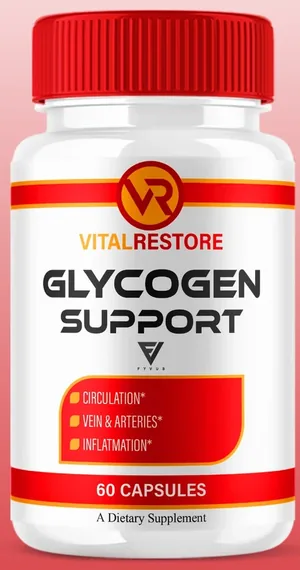
If you take any prescription medicine, check Vital Restore with your pharmacist before you use it, because sources flag several of its ingredients for possible interactions with diabetes medicines, blood thinners, blood-pressure medicines and thyroid medicine.
This page covers Vital Restore Glycogen Support, the red-and-white 60-capsule bottle. Its label lists vitamin C, zinc, chromium and a 400 mg blend of eight botanicals, without the amount of each botanical1. Below, we sort the possible drug interactions by medicine group, so you can find yours quickly and bring the right questions to your appointment.
One rule runs through the whole page. Never stop, reduce or change a medicine because of a supplement. If a pharmacist or doctor thinks the two should not be combined, the supplement is the thing to leave out, and that decision is theirs and yours together.
Medicine and condition check
Tick what applies to you. You get the label ingredients that reputable sources flag, to raise with your doctor or pharmacist. Nothing is saved or sent.
No. 01How can a supplement interact with a medicine?
A supplement can interact with a medicine by adding to its effect, working against it, or changing how the body absorbs or breaks it down.
NCCIH explains how medicines and supplements can interact in its "Know the Science" series2. In practice, there are three patterns to know about for this label:
- Adding to an effect. An herb that may lower blood sugar or blood pressure can stack on top of a medicine that does the same.
- Changing absorption. Chromium might reduce how much levothyroxine the body takes up3.
- Changing breakdown. Goji may change how the liver breaks down some medicines4.
Because the botanical amounts are not listed, no one can say how strong any of these effects might be with one or two capsules. That uncertainty is a reason to ask, not a reason to assume it is fine.
It also helps to know what these flags are not. They are not proof that a problem will happen to you. They are cautions that public health sources attach to each ingredient on its own, often based on larger amounts than a capsule may hold. Your pharmacist weighs them against your actual medicines and doses.
No. 02Which medicine groups do sources flag?
Five medicine groups come up in the sources for this label's ingredients; the table shows which ingredients are flagged for each.
| Medicine group | Ingredients flagged | What sources say |
|---|---|---|
| Insulin, metformin and other diabetes medicines | Chromium, bitter melon, olive leaf, holy basil, goji | May add to blood-sugar lowering35 |
| Blood thinners such as warfarin | Goji, holy basil | Major goji interaction with warfarin; holy basil might slow clotting6 |
| Blood-pressure medicines | Olive leaf | May add to the medicine's effect7 |
| Thyroid medicine such as levothyroxine | Chromium, holy basil | Absorption or thyroxine levels may change38 |
| Medicines broken down by the liver | Goji | May change how the liver handles some medicines4 |
NCCIH also says to talk to a provider about cinnamon if you take any medicine at all9. So even if your medicine is not in the table, ask.
No. 03Diabetes medicines and insulin
This is the largest group: five of the label's ingredients are flagged by sources for possible added blood-sugar lowering with diabetes medicines.
The NIH Office of Dietary Supplements says chromium taken with insulin, metformin or other diabetes medicines might cause low blood sugar3. Memorial Sloan Kettering says bitter melon may add to the effect of insulin and other diabetes medicines and cannot replace them5. It notes lab data on olive leaf lowering blood sugar, with relevance to people unknown, and advises care with insulin and diabetes medicines7. The MSD Manual says to talk to a doctor about holy basil if you take medicine that lowers blood sugar8. Sources also say to watch goji with diabetes medicines6.
This site does not present Vital Restore for diabetes. If you take any diabetes medicine, the diabetes medicines page has a fuller guide to raising it with your care team.
No. 04Blood thinners such as warfarin
If you take warfarin or another medicine that slows clotting, talk to your doctor before use, because goji has a major listed interaction with warfarin.
MedlinePlus rates the combination of goji and warfarin as a major interaction, because it might raise the chance of bruising and bleeding6. Memorial Sloan Kettering says holy basil might slow blood clotting, so taking it with blood thinners could add to that effect10.
People on warfarin often have regular blood tests to check how fast their blood clots. Any new supplement can matter for those results. Tell the clinic that manages your warfarin before you add anything, and do not adjust your dose yourself. More detail is on the goji berry page.
No. 05Blood-pressure medicines
Olive leaf is the ingredient flagged here: Memorial Sloan Kettering says it may add to the effect of blood-pressure medicines.
The same source describes small studies of olive leaf and blood pressure, with mixed results on blood fats7. Small studies like these say nothing about what Vital Restore will do for you. They do explain why a pharmacist would want to know you are taking it alongside a blood-pressure pill.
If you check your blood pressure at home, keep doing so as your doctor asked. Share the readings with them, and mention the supplement when you do. See the olive leaf page for more.
No. 06Thyroid medicine
Two ingredients are flagged with thyroid medicine: chromium, which might reduce levothyroxine absorption, and holy basil, which might lower thyroxine levels.
The NIH Office of Dietary Supplements gives the chromium point3. Memorial Sloan Kettering gives the holy basil point, and the MSD Manual also describes holy basil as possibly affecting thyroid medicine108. Ask your pharmacist whether the timing of a supplement matters for your own thyroid medicine.
Your thyroid blood tests are how your doctor sets your dose. Let them know about any supplement before your next test, so they can read the result in context. The holy basil page and the chromium page have the details.
No. 07Liver or kidney disease alongside your medicines
If you have liver or kidney disease, ask your doctor before use, because sources raise organ-related cautions for several ingredients and these conditions also change how medicines are handled.
NCCIH says the coumarin in cassia has been linked to liver problems and is a concern for sensitive people such as those with liver disease9. It also links some highly absorbable curcumin products to liver damage in some people11. The NIH Office of Dietary Supplements advises caution with chromium for people with kidney or liver disease, mainly at high amounts3. The label's chromium is 2 mcg per capsule, which is small, but the botanical amounts are not listed at all1.
NCCIH adds that some supplements have been linked to kidney damage12. People with kidney or liver disease often take several medicines whose doses depend on how well those organs work. That makes a pharmacist review of any new capsule worth the time.
No. 08Other supplements and over-the-counter products
Count every vitamin, mineral and herbal product you already take, because doubling up on the same ingredient is an easy mistake to make.
Some multivitamins also contain chromium, zinc or vitamin C. At the directions' 2 capsules a day, our arithmetic gives 100 mg of vitamin C and 15 mg of zinc from this capsule alone. The adult upper limits are 2,000 mg of vitamin C and 40 mg of zinc a day from all sources1314. Too much zinc over time can lead to copper deficiency.
Cinnamon, turmeric and other herbal capsules are sold on their own as well. If you already take one, this blend would add more of the same, in an amount the label does not state. Put every product on the list you give your pharmacist, even ones that seem harmless.
No. 09How to ask your pharmacist about Vital Restore
The most useful thing you can do is take the actual bottle to your pharmacist and ask them to check it against your full medicine list.
- Bring the bottle, not a screenshot of an ad. The side panel and ingredient list are what they need1.
- Bring a list of every medicine you take, including over-the-counter pills, vitamins and other supplements.
- Point out that the label does not give the amount of each botanical in the blend.
- Mention that the serving size is 1 capsule but the directions say 2 daily.
- Ask: "Is there anything here that could change how my medicines work?"
- Ask what signs to watch for, and who to call if they appear.
Write down the answer. If they advise against it, you leave the supplement out. Your medicines stay as prescribed. For the broader picture, read our safety overview and side effects page.
Safety: Vital Restore is for adults. The label says do not use it if you are pregnant or nursing, and to talk with your healthcare provider before use. If you take diabetes medicine, a blood thinner, blood-pressure or thyroid medicine, or have liver or kidney disease, ask your doctor or pharmacist first. Never use a supplement in place of medicine you have been prescribed. Stop and seek medical help if you have a reaction.
Frequently asked questions
Is metformin one of the medicines that needs a pharmacist check?
Ask your doctor or pharmacist first. The chromium fact sheet says chromium with metformin or other diabetes medicines might cause low blood sugar, and you should never change your metformin because of a supplement.
Does Vital Restore interact with warfarin?
It contains goji, and MedlinePlus lists goji with warfarin as a major interaction that may raise bleeding risk. Holy basil might also slow clotting, so talk to the clinic that manages your warfarin before use.
Can I take Vital Restore with levothyroxine?
Sources say chromium might reduce levothyroxine absorption and holy basil might lower thyroxine levels. Ask your pharmacist before use and keep your thyroid medicine as prescribed.
My medicine is not in the table. Am I in the clear?
Not necessarily. NCCIH says to talk to a provider about cinnamon if you take any medicine, and goji may change how the liver handles some medicines, so ask about any prescription.
Should I stop my medicine to try Vital Restore?
No. Never stop, reduce or change a prescribed medicine to make room for a supplement, and never use a supplement in place of medicine your doctor gave you.
Who should I ask about Vital Restore drug interactions, my doctor or my pharmacist?
Either is a good choice. Pharmacists check interactions every day and can see your full prescription list, while your doctor knows your conditions and test results.
Does taking the capsule at a different time of day avoid interactions?
We cannot say, because the label gives no timing advice and the botanical amounts are unknown. Your pharmacist can tell you whether timing matters for your own medicines.