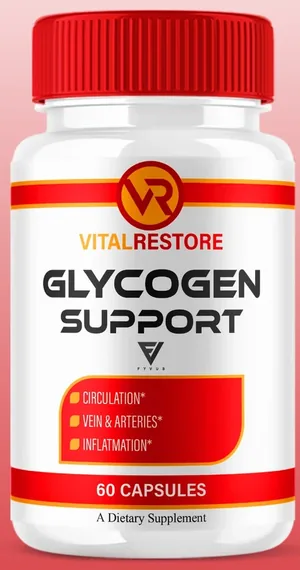
Whether Vital Restore is safe for you depends on your health and the medicines you take, and only your doctor or pharmacist can judge that. This capsule has not been studied as a finished product, and the label does not say how much of each botanical it holds1.
This page covers Vital Restore Glycogen Support, the red-and-white 60-capsule bottle. Other products with similar names exist and are not covered here. Below you will find the warnings printed on the bottle, the cautions public health sources give for each ingredient, and a plain list of people who should talk to a professional before using it.
The biggest safety theme is diabetes medicine. Several ingredients in this blend are linked by sources to blood-sugar effects, and that matters most for people who already take something for it. We never suggest changing or stopping any medicine. If you take one, your care team is the right place to start.
Medicine and condition check
Tick what applies to you. You get the label ingredients that reputable sources flag, to raise with your doctor or pharmacist. Nothing is saved or sent.
No. 01What does the Vital Restore label warn about?
The side panel prints six short warnings, and they are the starting point for any safety question1.
- Keep out of reach of children.
- Do not use if you are pregnant or nursing.
- As with any dietary supplement, consult your healthcare provider before use.
- Safety sealed for your protection.
- Do not use if the safety seal is broken.
- Store in a cool, dry place.
Notice what the label does not include. There is no allergen statement. The capsule shell is gelatin, so it is not plant-based. The amounts of the eight botanicals are hidden inside one 400 mg proprietary blend, so you cannot compare them with the amounts used in research1.
The directions also need a careful read. The serving size is 1 capsule, yet the directions say to take 2 capsules daily "or as needed." That gap is explained on the Supplement Facts page. Follow the printed directions, ask your doctor or pharmacist which amount suits you, and ask the seller which amount they intend.
No. 02Why do people on diabetes medicines need to talk to a doctor first?
Several ingredients in this blend are flagged by sources for adding to the effect of insulin and other diabetes medicines, which could push blood sugar too low.
The chromium fact sheet from the NIH Office of Dietary Supplements says chromium taken with insulin, metformin or other diabetes medicines might cause low blood sugar2. Memorial Sloan Kettering says bitter melon may add to the effect of insulin and other diabetes medicines, and that it cannot replace them3.
The federal health agency NCCIH is direct about supplements and diabetes. For most supplements there is no evidence of benefit, some have been linked to kidney damage, and you should not take a supplement in place of the medicine your doctor gives you4. It advises talking to your provider first.
This site does not present Vital Restore for diabetes or prediabetes. If you have either, bring the bottle to your doctor or pharmacist before you use it. Do not change, reduce or stop any medicine on your own. Our diabetes medicines page goes into this in more depth.
No. 03Ingredient cautions at a glance
Each named ingredient has its own cautions in public health sources; the table below sums them up in a line each.
| Ingredient on the label | Caution named by sources | Who should ask first |
|---|---|---|
| Cinnamon and cassia (two forms) | Cassia contains coumarin, linked to liver problems; larger amounts may cause stomach problems or allergy5 | People with liver disease or on any medicine |
| Turmeric | Some curcumin products linked to liver damage in some people6 | Anyone with liver concerns; pregnancy |
| Bitter melon | Stomach symptoms common; may add to diabetes medicine effects3 | Anyone on insulin or diabetes medicine; pregnancy |
| Goji (lycium) | Major interaction with warfarin; rare allergy7 | People on blood thinners or other medicines |
| Holy basil | Might slow clotting and affect thyroid medicine8 | Blood thinner or thyroid medicine users |
| Olive leaf | May add to blood-pressure medicine effect9 | Blood-pressure or diabetes medicine users |
| Chromium | Low blood sugar with diabetes medicines; may lower levothyroxine absorption2 | Diabetes or thyroid medicine users |
Prickly pear, vitamin C and zinc are covered on their own pages. At the label's amounts, vitamin C and zinc sit well under the adult upper limits of 2,000 mg and 40 mg a day1011. Count every other source you take, though, including multivitamins.
No. 04Cassia and coumarin: why two cinnamon forms matter
The blend lists two cinnamon-family ingredients, cassia powder and cassia extract, and NCCIH notes that cassia contains coumarin, which has been linked to liver problems5.
NCCIH says cinnamon is likely safe in the amounts found in food. Larger amounts or long-term use may cause stomach and gut problems and allergic reactions. Coumarin is a particular concern for sensitive people, such as those with liver disease5.
What we cannot tell you is how much cassia is in each capsule. The label gives one total for the whole 400 mg blend and nothing for each part1. So the coumarin amount is unknown. If you have liver disease, or take a medicine your doctor watches with liver tests, show the label to them. NCCIH also suggests talking to a provider if you take any medicine at all. More detail sits on our cinnamon and cassia page.
No. 05Turmeric and liver warning signs
NCCIH says some highly absorbable curcumin products have been linked to liver damage in some people, and it lists warning signs to act on6.
The signs it names are tiredness, nausea, poor appetite, dark urine and yellowing of the skin or eyes. If any of these show up, stop taking the supplement and talk to a provider6. NCCIH also says turmeric supplements may be unsafe in pregnancy. It describes them as likely safe for about two to three months at recommended amounts, with possible nausea, reflux, stomach upset, diarrhea or constipation.
NCCIH adds that there is not enough evidence that turmeric or curcumin helps with any health purpose. The label does not say whether this turmeric is a plain root powder in a small amount or a strong extract. It lists "turmeric root powder" with no amount1. See the turmeric page for the rest.
No. 06Goji, holy basil and blood thinners or thyroid medicine
Goji and holy basil are the two ingredients sources flag for bleeding risk, and holy basil and chromium are flagged with thyroid medicine.
MedlinePlus rates the goji interaction with warfarin as major, because it may raise the chance of bruising and bleeding7. Memorial Sloan Kettering adds that goji may change how the liver breaks down some medicines, and that it should be avoided in pregnancy and breastfeeding12.
Memorial Sloan Kettering says holy basil might slow blood clotting and might lower thyroxine levels8. The MSD Manual says to talk to a doctor if you take medicine that slows clotting or lowers blood sugar13. Chromium might reduce how well levothyroxine is absorbed2.
If you take any of these medicines, the safest step is a short talk with your pharmacist before your first capsule. Our medications page lists each medicine group in turn, and the goji and holy basil pages give the detail.
No. 07Who should check with a doctor or pharmacist before use?
Anyone in the groups below should get advice from a doctor or pharmacist before using Vital Restore, and the label itself says do not use if pregnant or nursing1.
- People who are pregnant or nursing: the label says do not use.
- People on insulin, metformin or any other diabetes medicine.
- People on blood thinners such as warfarin.
- People on blood-pressure medicine.
- People on thyroid medicine such as levothyroxine.
- People with liver disease or kidney disease.
- People with known plant allergies, or allergies to tobacco, peaches, tomatoes or nuts, which sources link to rare goji reactions7.
- Children: the label says keep out of reach of children.
A simple habit helps. Take the bottle itself, not a screenshot of an ad, to the appointment. The full ingredient list and the side panel are what your pharmacist needs to see.
No. 08When to stop and how to report a problem
If you notice anything unusual after starting a supplement, stop the supplement and contact your doctor; for a serious reaction, get emergency care at once.
Signs worth acting on include the liver warning signs NCCIH lists for turmeric, a rash or swelling that could be allergy, or signs of low blood sugar if you take diabetes medicine6. Stopping the supplement is your choice. Your prescribed medicines are a separate matter, so keep taking them as directed unless your doctor tells you otherwise.
You or your doctor can report a problem with a dietary supplement to FDA through MedWatch, its safety information and adverse event reporting program14. Keep the bottle so you can share any lot details printed on it. For questions about the product, the back label lists the distributor's phone line. For order problems, see customer support. Possible side effects are listed one by one on our side effects page.
Safety: Vital Restore is for adults. The label says do not use it if you are pregnant or nursing, and to talk with your healthcare provider before use. If you take diabetes medicine, a blood thinner, blood-pressure or thyroid medicine, or have liver or kidney disease, ask your doctor or pharmacist first. Never use a supplement in place of medicine you have been prescribed. Stop and seek medical help if you have a reaction.
Frequently asked questions
Is Vital Restore safe to take with metformin?
Only your doctor or pharmacist can answer that for you. The chromium fact sheet says chromium with metformin or other diabetes medicines might cause low blood sugar, so bring the bottle to them first and do not change your metformin on your own.
Can I use Vital Restore while pregnant or breastfeeding?
No. The label says do not use if you are pregnant or nursing, and sources also advise against several of its botanicals, such as goji and bitter melon, during pregnancy.
Is the cassia in Vital Restore a liver concern?
NCCIH links the coumarin in cassia to liver problems in sensitive people, such as those with liver disease. The label does not show how much cassia each capsule holds, so people with liver disease should ask their doctor before use.
Does Vital Restore contain allergens?
The label prints no allergen statement. It lists a gelatin capsule and eight plant ingredients, and goji has been linked to rare allergic reactions, so check the full list with your pharmacist if you have allergies.
Has Vital Restore itself been tested for safety in people?
We have found no published study of this product. The safety notes on this page come from public sources about each ingredient, which is why the amounts hidden in the blend matter.
What should I do if the seal on my bottle is broken?
Do not use it. The label says do not use if the safety seal is broken, so contact the order desk with your order ID to ask about your options.