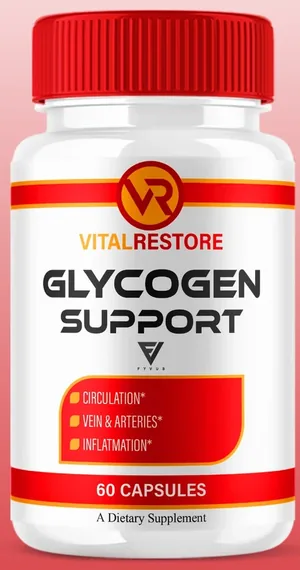
Vital Restore other ingredients are a gelatin capsule, rice powder, magnesium stearate (vegetable grade), microcrystalline cellulose and silicon dioxide, listed in that order under the Supplement Facts panel1. They are the inactive parts that hold and carry the actives.
This page explains what each one is in general terms, why capsule makers commonly use it, and what the Vital Restore Glycogen Support label does not tell you about them. The most practical point comes first: because the capsule is gelatin, the product is not plant-based.
Other ingredients rarely get attention, but they matter if you avoid animal products, follow a religious diet, or have a sensitivity to a filler. The general roles described here are how these materials are usually used across the supplement industry, not statements from the maker.
No. 01The five other ingredients at a glance
The label lists five other ingredients, and each has a common, well-known job in capsule making1.
| Label wording | What it is | Usual role in a capsule |
|---|---|---|
| Gelatin capsule | A shell made from animal collagen | Holds the powder |
| Rice powder | Finely ground rice | Filler that brings each capsule to a set fill |
| Magnesium stearate vegetable grade | A magnesium salt of a fatty acid | Lubricant so powder does not stick to machines |
| Microcrystalline cellulose | Purified plant fiber | Bulking agent and binder |
| Silicon dioxide | A fine mineral powder (silica) | Flow aid that limits clumping |
The label does not give amounts for any of these, which is normal for inactive ingredients. They sit alongside the 11 actives covered on the ingredients page.
No. 02The gelatin capsule
The capsule shell is gelatin, which is made from animal collagen, so Vital Restore is not plant-based1.
Gelatin is the most common material for hard two-piece capsules. It dissolves in the stomach and releases the powder inside. It is usually made from cattle or pig sources, sometimes fish. The label does not say which source this capsule uses.
That matters for three groups of readers:
- People who avoid all animal products.
- People who follow halal or kosher rules, where the gelatin source decides whether a capsule fits.
- People who avoid specific meats for health or personal reasons.
If you are in any of these groups, ask the seller which gelatin source is used and whether they hold paperwork for it. Opening the capsule and taking the powder alone is not something the label covers, so ask your pharmacist before trying that.
No. 03Rice powder
Rice powder is a common filler that tops up each capsule so every one holds the same total fill.
The 400 mg blend and three nutrients may not fill a capsule exactly, so a neutral powder makes up the difference. Rice is popular because it is mild and widely tolerated. It also means some of the weight in each capsule is not an active ingredient, which is normal and not a concern on its own.
The label lists rice powder second among the other ingredients1. It does not say how much is used, or whether the rice is processed alongside other grains. If you have a rice sensitivity, which is uncommon but does occur, show the label to your doctor before use.
No. 04Magnesium stearate, vegetable grade
Magnesium stearate is a lubricant that keeps powder from sticking to filling machines, and the label specifies a vegetable-grade form1.
It is made by combining magnesium with stearic acid, a fatty acid found in many plant and animal fats. The words vegetable grade suggest the fatty acid comes from a plant source, which is the usual choice when makers want to signal that. The amounts used in capsules are typically very small.
You may see online claims that magnesium stearate is harmful. Those claims are not covered by the sources this site relies on, and this page does not repeat them. The vegetable-grade wording does not change the point about the gelatin shell: the capsule as a whole still contains an animal-derived ingredient.
No. 05Microcrystalline cellulose and silicon dioxide
Microcrystalline cellulose adds bulk and helps powder hold together, while silicon dioxide helps it flow and keeps it from clumping.
Microcrystalline cellulose
This is purified cellulose, the fiber that gives plants their structure, usually from wood pulp. In capsules it acts as a filler and binder. It passes through the gut largely unchanged. You will find it in many tablets and capsules, both supplements and medicines.
Silicon dioxide
Also called silica, this is the same compound that forms sand and quartz, used here as a very fine powder. Small amounts keep the blend dry and free-flowing, which matters for a mix of herb powders and extracts that can absorb moisture. It is one reason the label asks you to store the bottle in a cool, dry place1.
Both are among the most widely used inactive ingredients in supplements and medicines.
No. 06Why other ingredients are listed apart from the actives
Other ingredients are listed below the Supplement Facts panel because they carry the actives rather than being the reason the product exists1.
On a supplement label, the boxed panel holds the ingredients the product is built around, with amounts where the maker gives them. Everything else that goes into the capsule appears in a separate line underneath, usually starting with the shell. The list runs roughly from the largest amount to the smallest, though no amounts are printed.
Reading the two parts together gives a fuller picture of each capsule:
- The panel tells you what the actives are, and for three of them how much.
- The other-ingredients line tells you what the capsule is made of and what helps it hold together.
- Neither part tells you how much of each botanical is present, which is covered on the proprietary blend page.
If you compare this bottle with another product, compare both parts. Two products can list similar actives yet use different shells, such as gelatin in one and a plant-based shell in another, which matters if you avoid animal products.
No. 07What the label does not say
The label prints no allergen statement and makes no claims about diet suitability, so you cannot rule anything in or out from the bottle alone1.
Specifically, the label does not state:
- The animal source of the gelatin.
- Whether the product suits halal, kosher or vegetarian diets.
- Whether it contains or was made near common allergens such as milk, soy, wheat, nuts or shellfish.
- The amount of any inactive ingredient.
- Where the capsules were filled.
None of this means a problem exists. It means the information is missing, and the seller is the right place to ask. Remember too that the actives include eight botanicals, and goji in particular has been linked to rare allergic reactions in people allergic to tobacco, peaches, tomatoes or nuts2.
No. 08If you have dietary restrictions or allergies
Ask the seller in writing about the gelatin source and allergens before you buy, and show the label to your doctor or pharmacist if you have a known allergy.
A clear written question gets a clearer answer. You could send something like this:
- What animal source is the gelatin capsule made from?
- Is the product suitable for a halal, kosher or vegetarian diet?
- Is the product made in a facility that also handles milk, soy, wheat, tree nuts, peanuts, fish or shellfish?
The seller's pack lists an order desk at +1 (302) 200-3480 for orders, and the back label lists a distributor line for product questions3. Keep the reply with your order email. If you have had a serious allergic reaction before, talk to your doctor before trying any new supplement, and read who it's for for the wider list of groups who should ask first.
No. 09Checking the capsules in your bottle
Before your first dose, check that the capsules look intact and consistent, and that the safety seal was unbroken when the bottle arrived1.
Gelatin capsules can soften in heat or humidity and turn brittle in very dry air. Signs worth noting:
- Capsules stuck together or soft to the touch.
- Cracked shells or loose powder in the bottle.
- A clear difference in color or size between capsules.
- An unusual smell when you open the cap.
If you see any of these, do not take the capsules and contact the order desk with your order ID and a photo. Store the bottle with the cap closed, away from steamy bathrooms and hot cars. The how to use page covers storage and directions, the supplement facts page reads the active panel, and the bottle check page explains what to look for on delivery. Prices are shown at checkout.
Safety: Vital Restore is for adults. The label says do not use it if you are pregnant or nursing, and to talk with your healthcare provider before use. If you take diabetes medicine, a blood thinner, blood-pressure or thyroid medicine, or have liver or kidney disease, ask your doctor or pharmacist first. Never use a supplement in place of medicine you have been prescribed. Stop and seek medical help if you have a reaction.
Frequently asked questions
Is the Vital Restore capsule made of gelatin?
Yes. The label lists a gelatin capsule, which is made from animal collagen. The label does not say which animal it comes from.
Is Vital Restore suitable for vegetarians?
Not as labeled. The gelatin capsule is an animal-derived ingredient, even though the magnesium stearate is listed as vegetable grade.
Why is rice powder in Vital Restore?
Rice powder is a common filler that brings each capsule to a set fill weight. The label does not say how much is used.
Does the Vital Restore label list allergens?
No allergen statement is printed. Ask the seller about common allergens and the facility before buying if you have allergies.
What does vegetable grade mean next to magnesium stearate?
It usually signals that the stearic acid comes from a plant source. It applies only to that ingredient, not to the gelatin capsule.
Is silicon dioxide in Vital Restore the same as sand?
It is the same compound, used as a very fine powder in small amounts to keep the blend flowing and free of clumps.