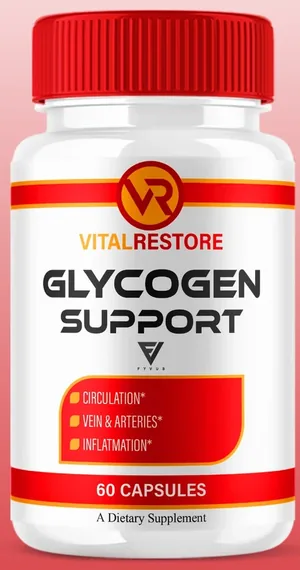
The Vital Restore proprietary blend is a 400 mg mix of eight botanicals per capsule, listed in order of weight, with no amount given for any single ingredient.
That format is allowed under federal labeling rules. It also means you know what is in the blend but not how much of each part. For most people that is a question of value. For some it is a question of safety, because two of the eight botanicals carry cautions that depend on the amount.
This page explains what a proprietary blend is, what the Vital Restore Glycogen Support label does and does not tell you, why the missing amounts matter for cassia and bitter melon in particular, and how to ask the seller for the details.
Label transparency at a glance
3 of 11 named actives have an amount printed. The other 8 sit inside the 400 mg blend with no amount shown.
- Vitamin C50 mg
- Zinc7.5 mg
- Chromium2 mcg
- Turmericamount not shown
- Cinnamon (cassia)amount not shown
- Prickly pearamount not shown
- Cassia extractamount not shown
- Goji berryamount not shown
- Bitter melonamount not shown
- Holy basilamount not shown
- Olive leafamount not shown
Amount printed (3)Amount not printed (8)
Label explorer
Tap an ingredient to see what the label says about it and the caution sources raise.
No. 01What a proprietary blend means on a label
A proprietary blend is a group of ingredients listed under one name with a single total weight, without the amount of each ingredient.
FDA labeling guidance for dietary supplements allows this. The label must show the blend's total weight and list the ingredients in descending order of weight, but it does not have to give individual amounts1. Any vitamins or minerals with a Daily Value that sit outside the blend still need their own amounts.
Sellers often use blends to protect a formula from copying. The trade-off is that buyers lose detail. You can see that turmeric is heavier than olive leaf in the mix, for instance, but not whether that means 100 mg against 10 mg or 51 mg against 49 mg.
The words proprietary blend are a description of the label format. They are not a mark of quality, a sign of a special formula or a claim about strength.
No. 02What the Vital Restore blend lists
The label lists eight botanicals in this weight order inside a 400 mg blend per capsule, with the plant part for each.
| Order | Ingredient as printed | Plant part | Amount given |
|---|---|---|---|
| 1 | Turmeric root powder | Root | No |
| 2 | Cinnamon powder (Cinnamomum cassia) | Bark, dry | No |
| 3 | Prickly pear extract (Opuntia ficus-indica) | Stem | No |
| 4 | Cassia extract (Cinnamomum aromaticum) | Bark | No |
| 5 | Goji berry extract (Lycium barbarum) | Fruit | No |
| 6 | Bitter melon extract (Momordica charantia L) | Fruit | No |
| 7 | Holy basil extract (Ocimum tenuiflorum) | Leaf | No |
| 8 | Olive leaf extract (Olea europaea) | Leaf | No |
All of this comes from the printed panel2. Outside the blend, the label gives amounts for vitamin C (50 mg), zinc (7.5 mg) and chromium (2 mcg) per capsule2. Together that makes 11 named actives, and only three have known amounts. Our ingredients page covers each one.
No. 03What is unknown about the eight botanicals
The label does not give the milligrams of any botanical, the extract ratios, or whether any extract is standardized to a marker compound.
Here is what is missing, item by item:
- Individual amounts. The 400 mg could be split evenly or heavily weighted to the first one or two items.
- Extract ratios. Five items are extracts. A ratio such as 10 to 1 would mean the extract came from much more raw plant, but none is printed.
- Standardization. No marker compound or percentage is listed for any extract.
- Combined cinnamon content. Two items are cinnamon-family: cassia powder and cassia extract. The label does not say how much cassia the two add up to.
There is also a printing oddity. The blend line shows 343% in the Daily Value column, yet a blend has no Daily Value, and the footnote says Daily Value not established2. That figure tells you nothing about strength. The supplement facts page discusses it further.
No. 04Why the amounts matter for cassia and coumarin
Cassia contains coumarin, a compound linked to liver problems in sensitive people, so the amount of cassia in a capsule is a real safety detail.
The National Center for Complementary and Integrative Health says cinnamon is likely safe in food amounts, but larger amounts or long-term use may cause digestive problems and allergic reactions3. It notes that cassia cinnamon contains coumarin, which has been linked to liver problems, and that this is a particular concern for people who are sensitive to it, such as those with liver disease3.
NCCIH also says it is unclear whether cinnamon helps blood sugar, and that research does not clearly support cinnamon for any health condition3. That says nothing about what Vital Restore will do for you.
Because this blend holds two cassia items in second and fourth place, cassia may make up a meaningful share of the 400 mg. Without amounts, nobody reading the label can tell how much coumarin a daily dose carries. If you have liver disease, take medicines processed by the liver, or already use cinnamon supplements, ask your doctor or pharmacist before use. Our cinnamon page has more detail.
No. 05Why the amounts matter for bitter melon
Bitter melon may add to the effect of insulin and other diabetes medicines, so its unknown amount matters most for people who take them.
Memorial Sloan Kettering describes bitter melon as a fruit eaten as food and used traditionally for blood sugar, with limited data and evidence rated as low quality in meta-analyses4. It notes that bitter melon cannot replace insulin or diabetes medicines, that digestive symptoms are common, and that case reports describe irregular heartbeat, stomach ulcer, kidney injury and seed toxicity4. It also advises avoiding it in pregnancy, based on animal studies.
The label lists bitter melon sixth of eight, so it is one of the lighter items in the blend. But lighter than what? Without a number, you and your doctor cannot judge how much you would take at 1 or 2 capsules a day.
If you take insulin, metformin or any other diabetes medicine, talk to your doctor or pharmacist before use, and never change or stop a medicine because of a supplement. Our bitter melon and diabetes medicines pages go further.
No. 06Other blend items where dose would help
Turmeric, goji and holy basil also carry cautions that a doctor or pharmacist would weigh more easily with an amount.
Turmeric is first in the blend, so it may be the heaviest item. NCCIH says there is not enough evidence that turmeric is beneficial for any health purpose, and that some highly bioavailable curcumin products have been linked to liver damage in some people5. Goji has a major interaction with warfarin that can raise bleeding risk6. Holy basil might slow blood clotting and might affect thyroid medicine7.
None of these notes describe what Vital Restore will do. They describe what sources say about each ingredient in general. The point here is narrower: the label gives your care team the names, but not the numbers they would normally use to judge a dose. Our medications page groups these cautions by medicine type.
No. 07What the totals can tell you
The total weight lets you work out the blend you would take per day, even when the individual amounts are hidden.
The serving size is 1 capsule, but the directions say take 2 capsules daily2. By our arithmetic, that means 400 mg of the blend at 1 capsule and 800 mg at 2 capsules. The weight order also gives a few firm limits:
- Turmeric is at least as heavy as each of the other seven items.
- Olive leaf is no heavier than any other item.
- The average across all eight is 50 mg per capsule, though the real split is unknown.
- The total of all eight cannot exceed 400 mg per capsule.
That is useful context but not a dose. Ask the seller which daily amount is intended, follow the printed directions, and ask your doctor or pharmacist which amount suits you.
No. 08How to ask the seller for the blend details
Ask the distributor named on the label, by phone and then in writing, for the amount of each botanical and any extract ratios.
The back label lists Amplify Distribution, LLC in Scottsdale, Arizona, with a questions line at +1 (623) 377-46092. Product questions fit that line better than the order desk.
- Ask for the milligrams of each of the eight botanicals per capsule.
- Ask for the combined amount of cassia from the powder and the extract.
- Ask for the extract ratio and any standardization for each extract.
- Ask whether the intended daily amount is 1 capsule or 2.
- Ask for a certificate of analysis for the lot printed on your bottle.
A seller may decline to share the formula. That is their choice, and it is also useful information when you decide. If you get answers, take them, with the bottle, to your doctor or pharmacist. To compare this format with fully disclosed labels, see our compare page.
Safety: Vital Restore is for adults. The label says do not use it if you are pregnant or nursing, and to talk with your healthcare provider before use. If you take diabetes medicine, a blood thinner, blood-pressure or thyroid medicine, or have liver or kidney disease, ask your doctor or pharmacist first. Never use a supplement in place of medicine you have been prescribed. Stop and seek medical help if you have a reaction.
Frequently asked questions
Is a proprietary blend legal on a supplement label?
Yes. FDA labeling rules allow a blend if the label shows its total weight and lists its ingredients in order of weight. Individual amounts are not required.
How much turmeric is in each Vital Restore capsule?
The label does not say. Turmeric is listed first in the 400 mg blend, so it is at least as heavy as each other botanical, but its exact amount is unknown.
Why does the blend show 343% when there is no Daily Value?
The label prints that figure, but a blend has no Daily Value and the footnote says none is established. It does not indicate strength.
Does a bigger blend weight mean stronger effects?
No. A blend weight is only the combined mass of its items. It says nothing about what the product will do for you.
Why does the cassia amount matter if cinnamon is a common spice?
Cassia contains coumarin, which NCCIH links to liver problems in sensitive people. Food amounts differ from concentrated capsules, and the label does not give the cassia amount.
Can my pharmacist judge the blend without the amounts?
They can check the ingredient names against your medicines, which is the most important step. Exact amounts from the seller would help them judge further.