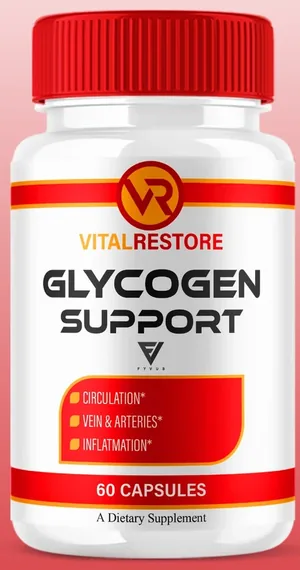
The Vital Restore proprietary blend is a single 400 mg line on the Supplement Facts panel that names eight botanicals without giving an amount for any of them.1 That one line makes up most of what the bottle lists by weight.
This post explains what a proprietary blend is under FDA labeling rules, what this blend names, why the printed 343% looks odd and what to ask before you buy. It describes the label only. This site has not tested the product, and nothing here says what the blend does.
No. 01What is a proprietary blend on a supplement label?
A proprietary blend is a group of ingredients listed together with one total weight, with the ingredients named in order of weight but without separate amounts.2
FDA's compliance guide for supplement labeling describes how blends are listed: the total weight of the blend is shown, and the components appear in descending order of weight.2 The company is not asked to print the amount of each part.
That is a legal format, and many products use it. The catch for a reader is practical. You cannot tell whether the first botanical is most of the 400 mg or a tiny fraction, so you cannot compare it with amounts used in research. See our proprietary blend page for the general picture.
You may see the term used for products of every kind. Seeing it on a bottle is a prompt to look at the rest of the panel, not a verdict.
No. 02What does this blend list, and in what order?
The label names eight botanicals inside the 400 mg blend, and the order printed is the order on the bottle.1
- Turmeric root powder
- Cinnamon powder (Cinnamomum cassia) bark (dry)
- Prickly pear extract (Opuntia ficus-indica) stem
- Cassia extract (Cinnamomum aromaticum) bark
- Goji berry extract (Lycium barbarum) fruit
- Bitter melon extract (Momordica charantia L) fruit
- Holy basil extract (Ocimum tenuiflorum) leaf
- Olive leaf extract (Olea europaea) leaf
Two of the eight belong to the cinnamon family, which means cassia appears twice, once as powder and once as extract. The label gives no extract ratios and no standardization details. Our ingredients page goes through each botanical.
No. 03Why are the individual amounts unknown?
The amounts are unknown because the label prints only the 400 mg total, and 400 mg is shared among eight botanicals plus whatever the extracts are made from.1
If the botanicals were equal, each would be about 50 mg. That is only an illustration of the arithmetic, not a fact about the bottle, since a blend can be uneven. Also, the order printed is the order of weight under the labeling rule, which at least tells you the first item is not smaller than the last.2
| What you can tell | What you cannot tell |
|---|---|
| Total blend weight per capsule | Amount of each botanical |
| Names and plant parts | Extract strength or ratio |
| Rough order by weight | Gap between one item and the next |
When a source describes research on an ingredient, it says nothing about the amount inside this blend.
This matters for the plants with the most cautions. If a botanical is a small share of the blend, a caution from a health site may carry less weight, and if it is a large share, more. You cannot tell which, and neither can this site.
No. 04Why does the blend line print 343%?
The blend line prints 343% in the percent Daily Value column, which does not add up, because a blend has no Daily Value and the footnote says DV is not established.1
The panel's own footnote reads "Daily Value (DV) not established." A percentage printed beside a line with no DV is therefore unexplained. We cannot say how the number was reached.
Other lines are easier to check. Vitamin C at 50 mg prints 84%, but the adult Daily Value is 90 mg, so 50 mg works out to about 56% by our arithmetic.3 Zinc at 7.5 mg prints 68%, which matches the 11 mg Daily Value.4 These are reasons to read carefully, not proof of a fault.
No. 05Does the blend change how you should read the bottle?
Yes, because with no per-botanical amounts you cannot judge a dose, so the cautions that health sites give for each plant matter more.
Several of the eight carry cautions. NCCIH notes that cassia contains coumarin, which has been linked to liver problems in sensitive people.5 Memorial Sloan Kettering notes that goji can interact with warfarin.6 Because amounts are unknown, you cannot rule such cautions out.
The bottle also doubles the blend if you follow the directions at 2 capsules a day, which gives 800 mg a day. See the Supplement Facts page for that arithmetic.
Nothing here is a reason to avoid or to buy. It is a reason to ask your pharmacist with the label in hand.
No. 06What should you ask the seller?
Ask the seller for the amount of each botanical, the extract ratios and any certificate of analysis they hold, and write down the answers.
The seller's pack lists a lot code and a certificate-of-analysis reference, but this site has not seen the certificate.7 Ask the order desk on +1 (302) 200-3480 whether they can share it, and compare the lot on your own bottle.
- How much of each botanical is in one capsule?
- Are the extracts standardized, and to what?
- Is there an allergen statement? None is printed.
If you take medicine, show the full panel to your pharmacist before you order.
Safety: Vital Restore is for adults. The label says do not use it if you are pregnant or nursing, and to talk with your healthcare provider before use. If you take diabetes medicine, a blood thinner, blood-pressure or thyroid medicine, or have liver or kidney disease, ask your doctor or pharmacist first. Never use a supplement in place of medicine you have been prescribed. Stop and seek medical help if you have a reaction.
Frequently asked questions
Is a proprietary blend illegal or unsafe?
No, it is a permitted label format under FDA rules. It simply means you cannot see each amount, so you cannot judge a dose.
How much turmeric is in Vital Restore?
Unknown. Turmeric is listed first in the blend, but the label gives only the 400 mg total for all eight botanicals.
Why is cinnamon listed twice?
The label names cassia powder and cassia extract separately. It does not say why or how much of each is used.
Can I work out the amounts myself?
Not reliably. Dividing 400 mg by eight is only an illustration, because the real split is not printed.
Does this post say what the blend does?
No. It describes the label only. This site has not tested the product and claims no results.