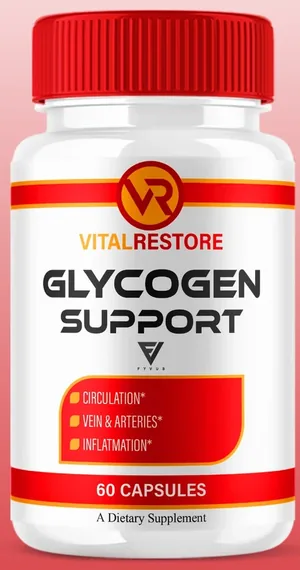
Cassia cinnamon in Vital Restore shows up twice: the Supplement Facts panel lists cassia cinnamon powder and, separately, cassia extract, both made from bark and both inside the 400 mg proprietary blend1. The label does not say how much of either one each capsule holds.
This page looks only at those two entries. It covers what the label actually prints, what the National Center for Complementary and Integrative Health says about cinnamon research, why cassia raises a specific liver question, how food amounts differ from supplement amounts, and who should talk to a doctor or pharmacist before taking a product with cassia in it. Nothing here describes what Vital Restore Glycogen Support will do for you.
No. 01How cinnamon appears on the Vital Restore label
The blend lists two cinnamon-family items: "Cinnamon powder (Cinnamomum cassia) bark (dry)" and "Cassia extract (Cinnamomum aromaticum) bark"1.
They sit second and fourth in the list of eight botanicals, after turmeric and with prickly pear extract between them. The two Latin names are both names used for cassia cinnamon, rather than Ceylon cinnamon. So, in practice, the capsule contains cassia in two forms: a dried, ground bark and an extract of the bark.
| Label entry | Latin name printed | Form and part | Amount per capsule |
|---|---|---|---|
| Cinnamon powder | Cinnamomum cassia | Dried bark powder | Not stated |
| Cassia extract | Cinnamomum aromaticum | Bark extract | Not stated |
| Whole blend (8 botanicals) | Several | Mixed | 400 mg |
The full panel, including the three nutrients with printed amounts, is on our supplement facts page.
No. 02Why the amount of cassia is unknown
The label gives one total for the whole blend, 400 mg per capsule, and no separate amount for either cinnamon entry1.
That is how a proprietary blend works. The eight botanicals share one number. Cassia could make up a large part of that 400 mg or a very small part, and the label does not let you tell which. It also does not give an extract ratio or say whether the extract is standardized to any compound. An extract can be more concentrated than the plain powder, so its weight alone does not tell you how much of the bark it came from.
The directions say to take 2 capsules daily1. By our arithmetic, that is 800 mg of the blend a day, of which an unknown share is cassia. Our proprietary blend page explains what you can and cannot learn from a blend line, and what to ask the seller.
No. 03What does research say about cinnamon and blood sugar?
NCCIH says it is unclear whether cinnamon helps with blood sugar, and that research does not clearly support cinnamon for any health condition2.
Cinnamon is one of the most searched supplement ingredients for blood sugar, so many people expect a firm answer. The honest answer from this federal source is that studies have not settled the question.
That finding is about cinnamon in general. It tells you nothing about what Vital Restore will do for you, because the amount of cassia in the capsule is unknown and no study of this product was supplied to this site.
The wider picture on diabetes supplements is similar. NCCIH says that for most dietary supplements there is no evidence of benefit for diabetes, and that you should not use a supplement in place of the medicine your doctor prescribed3. If you live with diabetes, our diabetes medicines page explains how to raise any supplement with your care team.
No. 04Coumarin in cassia and the liver
Cassia cinnamon contains coumarin, a natural compound that has been linked to liver problems, which NCCIH says is a concern for sensitive people such as those with liver disease2.
This is the main reason cassia gets more attention than other cinnamon types. Coumarin occurs naturally in the bark. The label does not print a coumarin figure, and we have not seen any test result for this product.
Here is what that means for a reader:
- If you have liver disease or have been told your liver is sensitive, ask your doctor before taking a product with cassia in it.
- The capsule has two cassia entries, so cassia is not a passing trace on this label, even though its amount is unknown.
- The blend also contains turmeric. NCCIH links highly bioavailable curcumin products to liver damage in some people4. Our turmeric page covers that note.
- Cinnamon in your diet, such as in baked goods or teas, adds to whatever you take in capsules.
Warning signs that NCCIH lists for liver trouble with turmeric products include fatigue, nausea, poor appetite, dark urine and yellowing skin or eyes4. If any appear, stop the product and contact a health professional.
No. 05Food amounts versus supplement amounts
NCCIH says cinnamon is likely safe in the amounts found in food, while larger amounts or long-term use may cause digestive problems and allergic reactions2.
A sprinkle on oatmeal and a daily capsule are not the same thing. Food use tends to be occasional and varied. A supplement is usually taken every day, often for weeks or months, and may contain a concentrated extract. That is why sources separate the two.
With this product, you cannot place your intake on that scale with confidence. The cassia amount is unknown, the extract ratio is unknown, and the directions add "or as needed" without explaining it1. A sensible approach is to follow the label's directions, not to take more than directed, and to bring the bottle to a pharmacist who can look at it alongside your other medicines and supplements.
NCCIH also notes that larger amounts of Ceylon cinnamon may be unsafe in pregnancy2. For this product the label is clear on its own: do not use it if you are pregnant or nursing1.
No. 06Who should ask a doctor first about cassia
Anyone who takes medicine, has liver disease, is pregnant or nursing, or reacts to cinnamon should talk to a doctor or pharmacist before taking a cassia-containing capsule.
NCCIH advises talking to your health care provider if you take any medicine and are thinking about cinnamon as a supplement2. For this product, the groups below deserve particular care:
- People with liver disease, because of coumarin in cassia.
- People on insulin, metformin or other diabetes medicines, because the blend combines cassia with other items that sources flag alongside diabetes medicines. Chromium, for example, might cause low blood sugar when taken with insulin or metformin5. See our medications page.
- People taking several medicines, especially ones processed by the liver.
- Anyone with a known cinnamon allergy, since sources list allergic reactions with larger or long-term use.
- Pregnant or nursing women, whom the label tells not to use the product.
Never change, reduce or stop a prescribed medicine to make room for a supplement. Our who it's for page covers the other groups the label and sources mention.
No. 07How to read cinnamon claims you see elsewhere
Read any page that promises a blood-sugar result from cinnamon with care, because the federal summary of the research does not support that kind of promise2.
Because cinnamon is a familiar kitchen spice, it is easy to assume a capsule with cinnamon in it is mild and well understood. Both parts of that assumption need checking. A supplement can deliver a concentrated extract every day, and the research on cinnamon for health conditions remains unclear.
When you read about cinnamon on a product page, an advert or a social post, a few checks help:
- Does it name the type of cinnamon and the amount per capsule?
- Does it cite a source you can look up, such as a federal health agency?
- Does it mention coumarin, liver concerns or medicine interactions at all?
- Does it tell you to keep taking your prescribed medicine and to talk to your doctor?
A page that skips all four is selling, not informing. Our safety page lists the cautions sources give for every ingredient on this label.
No. 08Questions to ask the seller about cinnamon
Ask the seller how much cassia powder and cassia extract each capsule contains, and whether anyone has measured coumarin.
These are fair questions, and a clear answer would help you and your pharmacist judge the product. Useful questions include:
- How many milligrams of cassia powder and of cassia extract are in one capsule?
- What is the extract ratio, and is it standardized to any compound?
- Has coumarin been measured in a finished batch?
- Is the 2-capsule daily direction the intended amount, given that the serving size is 1 capsule?
The label lists Amplify Distribution, LLC, with a phone number for questions1. Our ingredients page shows how cassia fits alongside the other ten named actives.
Safety: Vital Restore is for adults. The label says do not use it if you are pregnant or nursing, and to talk with your healthcare provider before use. If you take diabetes medicine, a blood thinner, blood-pressure or thyroid medicine, or have liver or kidney disease, ask your doctor or pharmacist first. Never use a supplement in place of medicine you have been prescribed. Stop and seek medical help if you have a reaction.
Frequently asked questions
Why does the label list cinnamon twice?
The blend contains cassia in two forms: a dried bark powder and a bark extract. The label names them separately but gives no amount for either.
Is the cinnamon in this capsule Ceylon or cassia?
The label names Cinnamomum cassia and Cinnamomum aromaticum, which are names for cassia cinnamon. Ceylon cinnamon is not listed.
How much coumarin is in one capsule?
We do not know. The label prints no coumarin figure and no cassia amount, so ask the seller whether coumarin has been measured.
Does cassia in this blend lower blood sugar?
NCCIH says it is unclear whether cinnamon helps blood sugar at all. That general finding says nothing about what this capsule will do for you.
Can I keep using cinnamon in my cooking if I take this product?
Food amounts are considered likely safe, but your total intake adds up. If you have liver concerns or take medicines, ask your doctor or pharmacist.
Should I stop my diabetes medicine if I take a cinnamon supplement?
No. Do not change, reduce or stop any prescribed medicine. Talk to your doctor before adding any supplement.