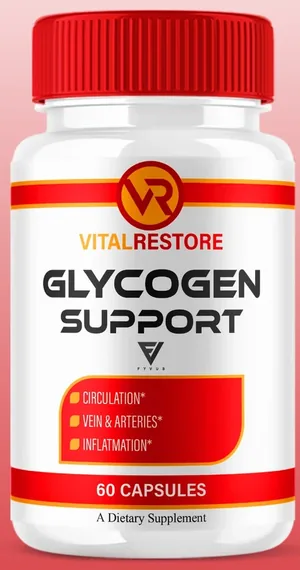
Vital Restore ingredients are 11 named actives: vitamin C, zinc and chromium with stated amounts, plus eight botanicals inside a 400 mg proprietary blend1. This page lists each one, the plant part used, and what public health sources say about it.
Everything here comes from the Supplement Facts panel on the Vital Restore Glycogen Support bottle and from named sources such as the NIH Office of Dietary Supplements, NCCIH and Memorial Sloan Kettering. Research on a single ingredient, often at doses we cannot compare, says nothing about what Vital Restore will do for you.
One point runs through the whole page: the label does not say how much of each botanical is in a capsule. Keep that in mind whenever you read about an herb below.
Label transparency at a glance
3 of 11 named actives have an amount printed. The other 8 sit inside the 400 mg blend with no amount shown.
- Vitamin C50 mg
- Zinc7.5 mg
- Chromium2 mcg
- Turmericamount not shown
- Cinnamon (cassia)amount not shown
- Prickly pearamount not shown
- Cassia extractamount not shown
- Goji berryamount not shown
- Bitter melonamount not shown
- Holy basilamount not shown
- Olive leafamount not shown
Amount printed (3)Amount not printed (8)
Label explorer
Tap an ingredient to see what the label says about it and the caution sources raise.
No. 01The full ingredient list at a glance
The label names three nutrients with exact amounts and eight botanicals that share a single 400 mg blend, per 1-capsule serving1.
| Ingredient (label wording) | Part or form | Amount per capsule |
|---|---|---|
| Vitamin C | Ascorbic acid | 50 mg |
| Zinc | Zinc oxide | 7.5 mg |
| Chromium | Chromium HVP chelate | 2 mcg |
| Turmeric | Root powder | Inside blend, not stated |
| Cinnamon (Cinnamomum cassia) | Bark powder, dry | Inside blend, not stated |
| Prickly pear (Opuntia ficus-indica) | Stem extract | Inside blend, not stated |
| Cassia (Cinnamomum aromaticum) | Bark extract | Inside blend, not stated |
| Goji berry (Lycium barbarum) | Fruit extract | Inside blend, not stated |
| Bitter melon (Momordica charantia) | Fruit extract | Inside blend, not stated |
| Holy basil (Ocimum tenuiflorum) | Leaf extract | Inside blend, not stated |
| Olive leaf (Olea europaea) | Leaf extract | Inside blend, not stated |
The blend ingredients appear in the order the label prints them. The panel also lists inactive ingredients such as the gelatin capsule, which are covered on the other ingredients page.
No. 02The three nutrients with stated amounts
Vitamin C, zinc and chromium are the only actives with exact amounts, so they are the only ones you can compare with daily intake figures.
Vitamin C, 50 mg
The adult recommended amount is 90 mg a day for men and 75 mg for women, with an extra 35 mg if you smoke2. Most US adults get enough from food, and the upper limit is 2,000 mg a day2.
Zinc, 7.5 mg
The adult recommended amount is 11 mg for men and 8 mg for women, and the upper limit is 40 mg a day from all sources3. Too much zinc over time can lead to low copper and nerve problems3. If you already take a multivitamin or a zinc product, add those amounts together.
Chromium, 2 mcg
Chromium is a mineral that may help the body use carbohydrates, fats and proteins4. Studies of chromium supplements for blood sugar in type 2 diabetes have mixed results, and the American Diabetes Association does not recommend them for people with diabetes4. The adequate intake for men aged 19 to 50 is 35 mcg a day4. More detail is on the chromium and vitamin C and zinc pages.
No. 03The eight botanicals and what sources say
Each botanical has some research or traditional use behind it, but sources describe the evidence as limited, mixed or low quality for most of them.
- Turmeric root: NCCIH says there is not enough evidence that turmeric or curcumin is beneficial for any health purpose5. See turmeric.
- Cinnamon and cassia bark: it is unclear whether cinnamon helps blood sugar, and research does not clearly support it for any health condition6. See cinnamon.
- Prickly pear stem: a 2019 review found the fruit mostly had no significant effect on glucose or insulin, while the stem pad showed promise that needs more study7. See prickly pear.
- Goji berry fruit: there is little evidence for its many traditional uses8. See goji berry.
- Bitter melon fruit: used as food and traditionally for blood sugar, but data are limited and reviews rate the evidence as low quality9. See bitter melon.
- Holy basil leaf: an Ayurvedic herb also called tulsi, used traditionally for stress and blood sugar, with few high-quality human studies10. See holy basil.
- Olive leaf: contains oleuropein; small studies have looked at blood pressure and metabolic markers, with mixed results on blood fats11. See olive leaf.
None of these findings were made with this product. They describe single ingredients, usually at known doses, which this label does not give.
No. 04Why the amounts inside the blend are unknown
The label gives one combined weight, 400 mg, for all eight botanicals and does not list the milligrams of each one1.
A proprietary blend lets a label show the total without the breakdown. The order of the list tells you only that the first item is likely present in the largest amount, not by how much. The label also does not state extract ratios or whether any extract is standardized to a marker compound.
In practice this means:
- You cannot compare a capsule with the doses used in any study of a single herb.
- You cannot tell whether an ingredient late in the list, such as olive leaf, is present in more than a trace amount.
- Your doctor or pharmacist will be working with less information than usual when checking for interactions.
If the amounts matter to you, ask the seller for them in writing before you buy. The supplement facts page reads the rest of the panel.
No. 05Two cinnamon-family ingredients in one blend
Two of the eight botanicals come from the cinnamon family: cassia bark powder and cassia bark extract1.
The label uses two different Latin names, Cinnamomum cassia for the powder and Cinnamomum aromaticum for the extract. Both refer to cassia-type cinnamon rather than the Ceylon type. This matters because cassia contains coumarin, which has been linked to liver problems, a concern for sensitive people such as those with liver disease6.
Cinnamon is likely safe in food amounts, but larger or long-term use may cause stomach and gut problems and allergic reactions6. With two cassia sources and no stated amounts, nobody can say how much coumarin a capsule carries. If you have liver disease, or regularly eat a lot of cinnamon, ask your doctor before use.
No. 06Ingredients that matter if you take medicine
Several ingredients on this list have been flagged by health sources for people who take diabetes medicine, blood thinners, blood-pressure medicine or thyroid medicine.
- Chromium might cause low blood sugar with insulin or other diabetes medicines, and might reduce absorption of levothyroxine4.
- Bitter melon may add to the effect of insulin and other diabetes medicines and cannot replace them9.
- Goji has a major interaction with warfarin that raises bleeding risk8.
- Holy basil might slow blood clotting and might affect thyroid medicine10.
- Olive leaf may add to the effect of blood-pressure medicine11.
NCCIH advises talking to your provider before taking any supplement if you have diabetes, and never using one in place of diabetes medicine12. Do not change or stop any medicine on your own. The safety page has the full list of cautions.
No. 07Questions the ingredient list leaves open
The ingredient list tells you what is in the capsule, but not how much of each botanical, how it was extracted, or where it came from.
Here is what the panel does not state1:
- The milligrams of each of the eight botanicals.
- Extract ratios, such as how much raw plant went into each extract.
- Whether any extract is standardized, for example to curcumin in turmeric or oleuropein in olive leaf.
- An allergen statement.
- Where the ingredients were grown or where the capsules were made.
None of these gaps proves anything is wrong. They are simply questions worth putting to the seller before you buy, especially if you have allergies, take medicine or want to compare this product with another. Write your questions down and keep the answers with your order email.
Goji is a good example of why this matters. Rare allergic reactions have been reported, and people allergic to tobacco, peaches, tomatoes or nuts may be more likely to react13. Without an allergen statement, the ingredient list is the only clue you have.
No. 08How to read ingredient research without overreading it
Read any study about an herb as information about that herb, not about this capsule.
Three questions help when you see a claim online about one of these ingredients:
- What dose was used, and does this label even state a dose for it?
- Was the study done in people, in animals or in a lab dish?
- Was the result confirmed by a review of several studies, or is it one small trial?
For bitter melon, for example, reviews of several studies rate the evidence as low quality9. For olive leaf, lab findings on blood sugar are of unknown relevance to people11. A capsule that contains a little of each herb does not add those weak signals up into a strong one.
If you want help weighing what you have read, bring the bottle to your pharmacist and ask them to look at the full panel with you.
Safety: Vital Restore is for adults. The label says do not use it if you are pregnant or nursing, and to talk with your healthcare provider before use. If you take diabetes medicine, a blood thinner, blood-pressure or thyroid medicine, or have liver or kidney disease, ask your doctor or pharmacist first. Never use a supplement in place of medicine you have been prescribed. Stop and seek medical help if you have a reaction.
Frequently asked questions
How many active ingredients are in Vital Restore?
The label names 11: vitamin C, zinc and chromium with stated amounts, and eight botanicals inside a 400 mg proprietary blend.
How much turmeric is in each capsule?
The label does not say. Turmeric is listed first in the 400 mg blend, but the milligrams of each botanical are not printed.
Why are there two cassia items in the ingredient list?
It lists cassia bark powder and a separate cassia bark extract under two Latin names. Both are cassia-type cinnamon, which contains coumarin.
Is the prickly pear in Vital Restore from the fruit or the stem?
The label lists prickly pear stem extract. A 2019 review found stem pad results needed more study, while the fruit mostly showed no significant effect on glucose.
Which Vital Restore ingredients should I ask my pharmacist about?
Bring up chromium, bitter melon, goji, holy basil and olive leaf, since sources flag them with diabetes, blood-thinning, blood-pressure or thyroid medicines. Show the pharmacist the whole label.
Does research on these herbs show what Vital Restore will do?
No. Studies on single herbs used their own doses and preparations. This label does not state the amount of any botanical, so the findings cannot be applied to it.