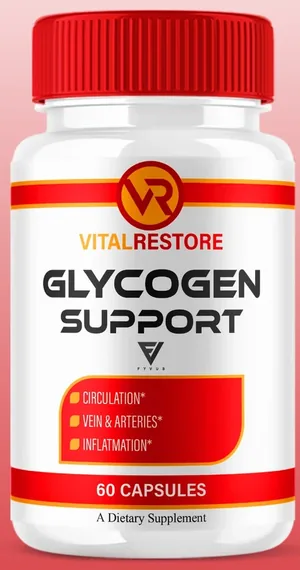
A holy basil tulsi supplement is made from a plant used for centuries in Ayurvedic practice, and the public record on it is thin.1 This post sums up what Memorial Sloan Kettering and the MSD Manual say, then shows where holy basil sits on the Vital Restore Glycogen Support label.
This site has not tested the product and holds no studies or customer data about it. What follows describes the herb, and it says nothing about what Vital Restore will do for you. Our holy basil page covers the label entry in more detail.
No. 01What is holy basil, also called tulsi?
Holy basil is an herb known as tulsi in Ayurveda, the traditional medicine system of India.1 Its botanical name is Ocimum tenuiflorum, and the leaf is the part most often used.
Memorial Sloan Kettering notes that it has been used traditionally for stress and for blood sugar.1 Traditional use is a record of history, not a test of whether something works. Tulsi is also a different plant from the sweet basil you cook with, so the two are not interchangeable.
You can find it as tea, as capsules and as liquid extracts. Strength varies a great deal between products, because extracts are made in different ways.
No. 02How strong is the human evidence?
There are few high-quality human studies of holy basil.1 That is the plain summary from MSK, and the MSD Manual describes the research in similar cautious terms.2
| Question | What the sources say | Source |
|---|---|---|
| Traditional uses | Stress and blood sugar | MSK |
| Human trials | Few, and not high quality | MSK |
| Firm conclusions | Not yet possible | MSD Manual |
The takeaway is modest. A herb can be popular for a long time and still lack careful trials. Anyone who tells you it is proven for a health goal is going beyond the sources cited here.
It also helps to separate three ideas that often get blurred: what a plant contains, what it has been used for, and what a trial has shown. Holy basil has a long record of the second, a modest amount of the first, and little of the third. A label that lists the plant tells you only that it is in the capsule.
Small studies can be hard to read. They may use different parts of the plant, different extracts and different doses, so their results cannot simply be added together. That is another reason the sources stay cautious.
No. 03Which medicines and conditions call for care?
Holy basil might affect blood clotting and thyroid hormone, so people on related medicine should ask a professional first.1
- Medicine that slows clotting: holy basil might slow clotting too, which matters for anyone on a blood thinner.1
- Thyroid medicine: it might lower thyroxine levels, so it could interact with thyroid medicine prescribed by your doctor.1
- Medicine that lowers blood sugar: the MSD Manual advises talking to a doctor if you take medicine that slows clotting or lowers blood sugar.2
These are reasons to speak up, not reasons to change anything yourself. Never stop or alter a prescribed medicine on your own. Our medications page lists the groups to raise with your pharmacist, and the safety page gathers the other cautions.
No. 04Where does holy basil appear on the Vital Restore label?
The label lists holy basil extract (Ocimum tenuiflorum) leaf as one of eight botanicals inside a 400 mg proprietary blend.3
The label gives a single total for the blend and does not print the amount of each botanical. So the amount of holy basil per capsule is unknown, and this site will not guess it. The label also does not state an extract ratio or standard strength.
The botanicals are printed in label order: turmeric, cassia powder, prickly pear stem, cassia extract, goji berry, bitter melon, holy basil and olive leaf. Holy basil is seventh of eight. In a blend, order can hint at relative amounts, but the label does not say that, so read it as nothing more than a printed sequence.
Because the amount is unknown, the cautions above cannot be matched to a dose. That is a good reason to show the bottle to a pharmacist if you take any medicine.
Our proprietary blend page explains why a single blend total hides the individual amounts.
No. 05What should you do before using a product with holy basil?
Ask your doctor or pharmacist before use if you take any regular medicine or have a medical condition. The label itself says to consult a healthcare provider before use.3
- Bring the bottle or a photo of the supplement facts panel.
- Say which medicines you take, especially blood thinners, thyroid medicine and diabetes medicine.
- Ask whether the botanical blend suits your situation.
- Follow the directions on the label and your provider's advice.
The label also says not to use the product if you are pregnant or nursing. Keep it out of reach of children and do not use it if the safety seal is broken.
If you do start a product, keep a simple note of the date, the amount you take and anything unusual you notice, and share it at your next appointment.
Safety: Vital Restore is for adults. The label says do not use it if you are pregnant or nursing, and to talk with your healthcare provider before use. If you take diabetes medicine, a blood thinner, blood-pressure or thyroid medicine, or have liver or kidney disease, ask your doctor or pharmacist first. Never use a supplement in place of medicine you have been prescribed. Stop and seek medical help if you have a reaction.
Frequently asked questions
Is tulsi the same as the basil in pasta sauce?
No. Tulsi is holy basil, Ocimum tenuiflorum, a different plant from culinary sweet basil. Supplements use extracts of the holy basil leaf.
Does holy basil thin the blood?
MSK says holy basil might slow blood clotting, so people who take blood thinners should talk to a doctor before using it.
Is the holy basil dose in this capsule known?
That is not known. The label shows one 400 mg blend total for eight botanicals and no per-ingredient amounts.
Does this post say Vital Restore works?
No. It describes holy basil as an ingredient and says nothing about what the product will do for you, because this site has not tested it.