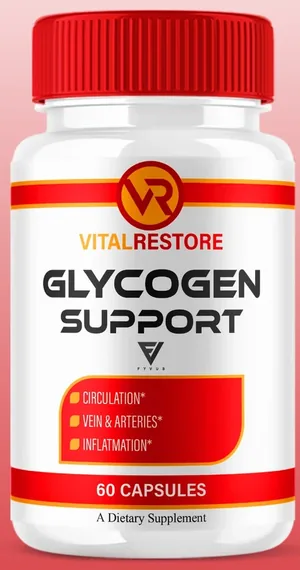
FDA dietary supplement rules are lighter than many shoppers assume, because supplements are not reviewed and cleared before they go on sale.1 That single fact changes how you should read any bottle, including Vital Restore Glycogen Support.
This post explains what FDA does, what it does not do, and which label details are worth your attention. It is general information about supplements. It says nothing about what any single product will do for you, and this site has not tested the Vital Restore bottle.
If you take medicine or have a health condition, a doctor or pharmacist is the right person for product questions. Use this post to ask better ones.
No. 01Does FDA approve supplements before they are sold?
No. FDA does not approve dietary supplements for safety or effectiveness before they reach shelves or online stores.1
Medicines go through a different path, with review before sale. Supplements are regulated as a category of food, and the company that makes or sells the product carries the responsibility for its safety and for honest labeling.1
This is why a bottle can sit in front of you with a long ingredient list and no agency stamp on it. The absence of a stamp is normal for the category. It is also why the label, the seller details and your own pharmacist matter more than a logo.
Many shoppers assume that a product sold in a pharmacy aisle or a polished online store has passed some kind of agency check. For supplements, that assumption is wrong. A store can stock a product without any government review of it.
The practical result is simple. Read every supplement claim as the seller's own statement, and judge it by the label and by independent sources such as the NIH Office of Dietary Supplements.2
No. 02What does FDA actually do for supplements?
FDA sets labeling rules and can act on products after they are on the market, for example when a product is found to be unsafe or is marketed with illegal claims.1
It also runs a reporting program. People can send reports of bad reactions to a product through MedWatch, and those reports help the agency spot problems.3
| Topic | What FDA does | What FDA does not do |
|---|---|---|
| Before sale | Sets label rules | Review each product first |
| After sale | Can act on unsafe or illegally marketed products | Test every bottle |
| Problems | Takes reports through MedWatch | Follow up every individual report with you |
The table is a simplified summary. Read the FDA pages for the exact wording.
Think of the agency as a referee that steps in after a problem appears, not a gatekeeper standing at the door. That is a reason to be careful with new products, with products that make large promises and with anything that arrives from an unknown seller.
No. 03What does the statement on the side panel mean?
Supplement labels carry a statement that the claims have not been evaluated by FDA, and the Vital Restore bottle prints one on its side panel.4
In plain terms, it tells you that no agency has checked the words on the front against evidence. The label on this bottle also prints asterisked marketing words on the front panel. This site does not repeat them as claims and does not claim that the product does anything.
A label statement is a legal notice, not a quality mark. It is neither good news nor bad news. It is a reminder to read the Supplement Facts panel and the warnings, and to weigh the front-of-pack wording with care.
It is also worth knowing that the statement covers the wording of claims. It does not describe how clean a factory is, how accurate the amounts are or whether the bottle in your hand matches the one in a photo. For those questions you need the seller's records, which this site has not seen.
No. 04What can you check yourself on any supplement label?
You can check the panel that lists amounts, the other ingredients, the directions, the warnings and who distributes the product.2
- Does the Supplement Facts panel list a serving size and servings per container?
- Are amounts given for each ingredient, or only for a blend as a whole?
- Do the directions match the serving size?
- Is there a distributor name and a phone number?
- Are warnings for pregnancy, medicines and children printed?
On the Vital Restore bottle, the panel lists vitamin C, zinc, chromium and a 400 mg proprietary blend, and the distributor line and a phone number are printed on the back label.4 Our Supplement Facts page walks through each line, including the points that do not add up.
None of these checks proves a product is good or bad. They show whether the label gives you enough to ask sensible questions. A blend with no individual amounts, for example, leaves you unable to compare a dose with the amounts studied in research.
No. 05How do you report a bad reaction?
Stop using the product, contact a health professional if you feel unwell, and then consider filing a report with FDA through MedWatch.3
Keep the bottle, the lot number printed on it and any order emails. Those details make a report more useful. For problems with an order rather than your health, the seller's order desk is the first stop, and our legit checklist page lists what to gather.
For safety questions about medicines you already take, see the safety page and speak with your doctor or pharmacist. Do not change any medicine on your own because of something you read on a website.
Safety: Vital Restore is for adults. The label says do not use it if you are pregnant or nursing, and to talk with your healthcare provider before use. If you take diabetes medicine, a blood thinner, blood-pressure or thyroid medicine, or have liver or kidney disease, ask your doctor or pharmacist first. Never use a supplement in place of medicine you have been prescribed. Stop and seek medical help if you have a reaction.
Frequently asked questions
Is a dietary supplement the same as a medicine?
No. FDA regulates the two categories differently, and supplements are not reviewed before sale. A supplement label cannot tell you what a product will do for your body.
Does a missing FDA stamp mean a product is fake?
No. There is no stamp for supplements, so its absence says nothing either way. Check the label details, the seller and the lot code instead.
Who is responsible for a supplement being safe?
The company that makes or sells it carries that responsibility under the rules FDA describes. You should still ask a pharmacist about interactions with your medicines.
Where do I report a problem with a supplement?
FDA runs MedWatch for reports of bad reactions. Tell your doctor too, and keep the bottle and lot number.
Does this site speak for FDA or the seller?
No. This is an independent information site. It does not sell the product and has not tested it.